The Edge of Words
Coercion:
The Looking Glass
Featuring Wide Sargasso Sea & The Substance
The monster is not a person but a condition — and the culture that issues the verdict is no longer distinguishable from it.
I copy your every move, but I have no voice and no body of my own. When you smile, I grin. When you leave, I disappear. What am I?
The Looking Glass
A Relation, Not An Attribute
Introduction — Who Holds The Mirror
Monstrosity is a relation before it is an attribute. Dominant culture determines what it cannot tolerate, situates that intolerance within a body, and reads its verdict as a description of the body condemned. Such displacement is what Beauvoir identifies in woman as the Other, a construction of the judging culture, not a property of the judged.
The instrument of that substitution is not dissimilar to a fun house mirror, which retains a mirror's authority while abandoning its accuracy, so distortion is mistaken for reflection. Cohen's Monster Theory proceeds from the same premise, holding that monsters "ask us why we have created them." Yet that question presupposes an identifiable creator.



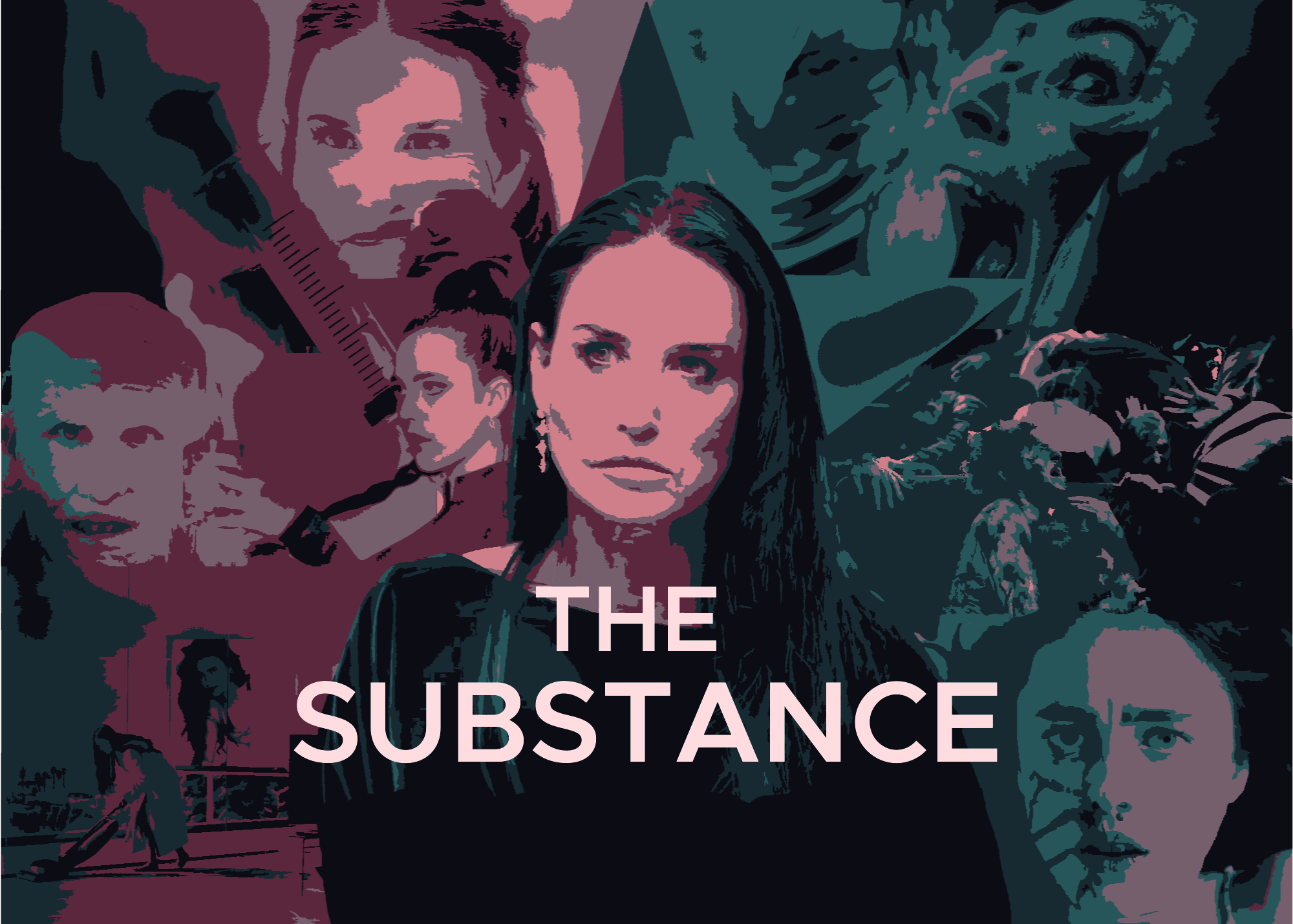
In Jean Rhys's postcolonial gothic novel Wide Sargasso Sea (1966), such identification remains possible, since the mirror is held by a man who speaks, whom Antoinette Cosway answers in his own vocabulary. In Coralie Fargeat's postmodern body horror The Substance (2024) it does not, since the ideal condemning Elisabeth Sparkle originates nowhere.
Furthermore, the consequence is ontological rather than evaluative. Where no individual holds the mirror, monstrosity is redistributed across the collective, and the woman experiences as personal deficiency what was imposed as cultural demand.
Thus the monster ceases to be a person and becomes a condition, revealing modern culture to be indistinguishable from its own judgement.


The Named Mirror
01 — Rhys: Judgement With An Author
Rhys locates the distorting mirror within the people who look at Antoinette Cosway, and grants each a voice, most notably through her intertextual debt to Brontë's Jane Eyre (1847), where Bertha's account is dictated by her husband. Rhys's polyphonic structure restores Antoinette's narration while surrendering a third of the novel to the husband's voice.
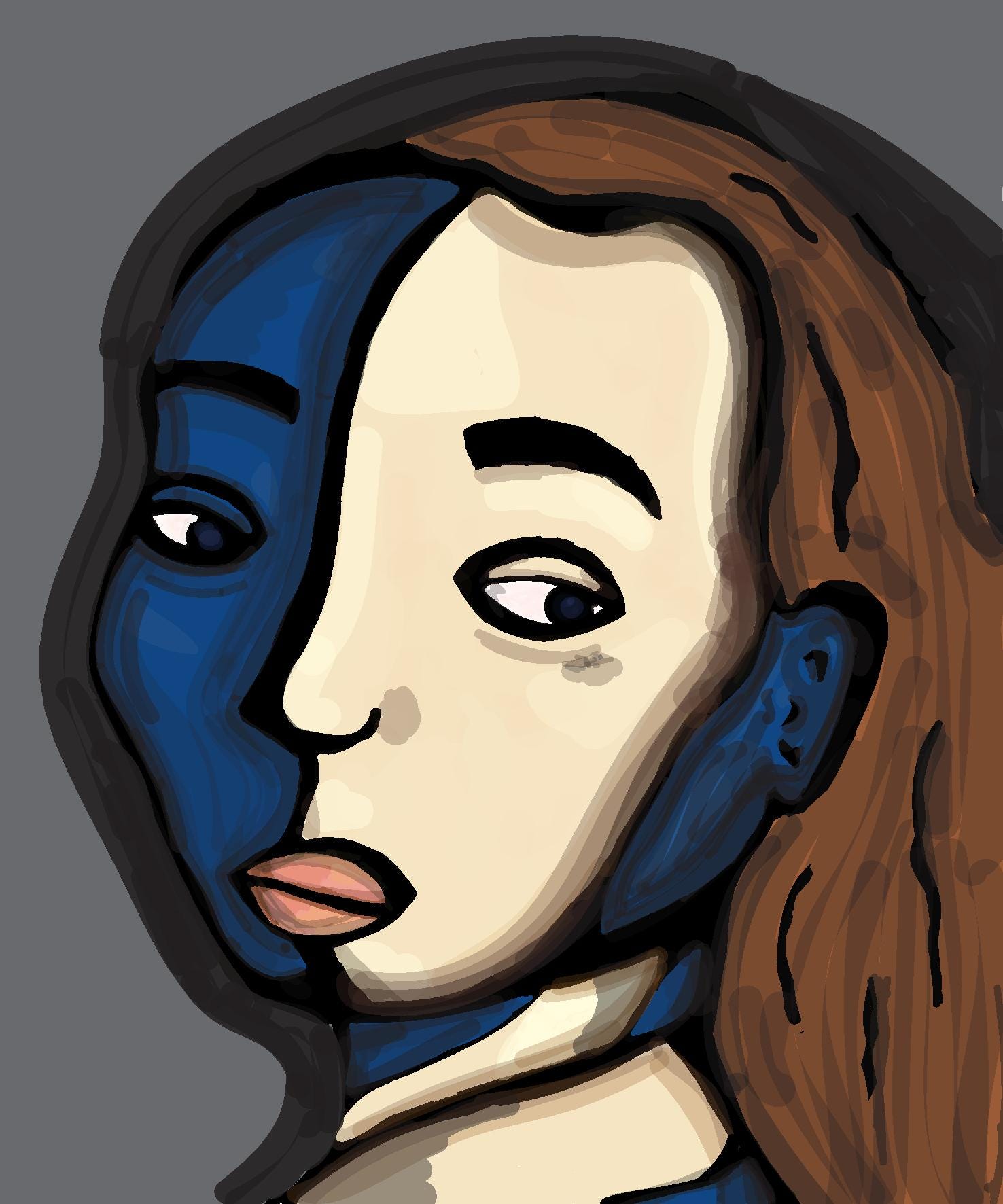
Antoinette's monstrosity is thus positional rather than characterological, since a white Creole is claimed by neither the formerly enslaved nor the English who despise her birthplace. Her syntax converts that exclusion into accusation,
"I've heard English women call us white niggers. So between you I often wonder who I am and where is my country and where do I belong and why was I ever born at all."
The polysyndeton withholds any terminal point, so the question of belonging remains unresolved, while the outward-directed interrogatives transform bewilderment into interrogation of the colonial order. More damaging is the embedded slur, since Antoinette's self-description survives only in the lexicon of those who reject her.


Her friend Tia then becomes the next mirror,
"It was as if I saw myself. Like in a looking-glass."
The doubled simile and parataxis withhold explanation so recognition registers as involuntary, the reflection returning only others' condemnations. Rochester is the last and most distorting mirror, yet his monster remains refusable.
"I hated the place... I hated its beauty and its magic... Above all I hated her."
The anaphora accumulates towards its final object, and the transposition of aesthetic response into personal grievance exposes the desire he disowns, confirming Cohen's claim that "fear of the monster is really a kind of desire." Jennifer Gilchrist reads his refusal of Nietzschean self-overcoming as a decision to remake his wife. That monster is Bertha rather than Antoinette, a description laid over a person,
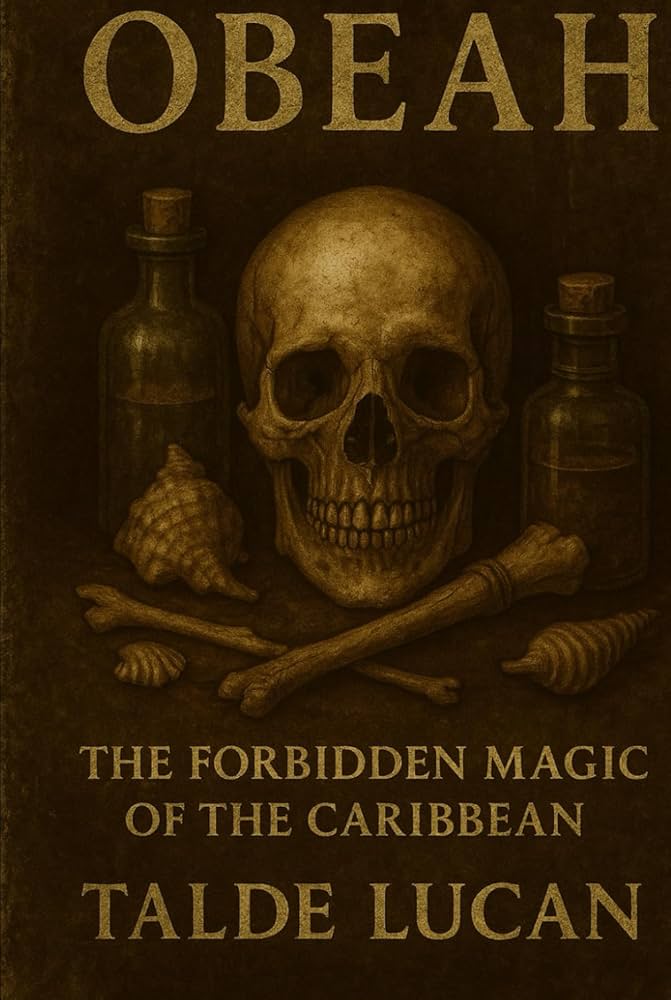
"Bertha is not my name. You are trying to make me into someone else, calling me by another name. I know, that's obeah too."
The epistrophe of "name" identifies naming as the instrument of subjection, while Antoinette turns obeah, his own term for Caribbean superstition, back upon his act, producing what Bakhtin terms double-voiced discourse.
However, such a reply depends on a construction whereby Antoinette and Bertha remain separable, and Rochester exists to be accused. Rhys's tripartite structure holds both, surrendering Part Two to Rochester's direct voice while Parts One and Three remain Antoinette's. Cohen's question is thus answerable, since the monster discloses the man who "created" her.
A Mirror With No Holder
02 — Fargeat: Judgement Without An Author
Fargeat inherits this structure, yet withdraws both the speaker and the separability of woman from the imposed name. Writing amid AI-generated influencers and GLP-1 agonists such as Ozempic sold direct to consumers, she dramatises a culture lacking the overt authority the earlier text retains.
The activator is marketed as a better version rather than a copy, so Sue is measured against a standard no identifiable party set. She materialises as a Baudrillardian simulacrum, and Elisabeth becomes the deficient original of a template which never existed. In a postmodern dislocation of singularity, Sue consequently becomes the text's monster.
Instruction reaches her only as voice-over and an unseen operator, so the promise that she may
"surpass her own genetic potential"
issues from no one, converting improvement into obligation as the modal disguises compulsion as permission. The number assigned in place of a name repeats Rochester's nomination without the nominator. What colonial classification performs upon Antoinette's race, the industry performs upon Elisabeth's age, discarding her at fifty as the criterion alters and the logic holds.
Wide-angle lenses and extreme close-up disarticulate Sue into thighs, hips and mouth across the aerobics sequence, so the spectator performs the fragmentation later made surgical.



Furthermore, The Substance incorporates more social languages than Rhys does, advertising, corporate telephony and television among them, none issuing from an addressable speaker. The film is consequently heteroglot without being dialogic, since no disembodied operator can be appropriated as obeah was.
Conversely, Rochester's interiority exposes him to indictment whereas Harvey, a caricature shot in distorting close-up, has neither a self to overcome nor a case to answer. Antoinette is undone by the mirror's withdrawal and Elisabeth by its ubiquity, since the apartment's white tiling and clinical lighting return her image from every surface.
Form reinforces this, as cinema cannot surrender the camera as a novel surrenders the first person, and the seven-day alternation replaces sequence with iteration, a structure lacking origin or terminus.
Sue kills Elisabeth in the clinically bright bathroom that produced her, where the handheld camera abandons the Kubrickian symmetry that held her and the non-diegetic score gives way to the diegetic impact of fists, denying the audience the mediation music supplied.
Sue catches her reflection mid-beating, pauses, and continues, because no separable self remains to interrupt.
Monstro Elisasue is the result, woman and standard fused in one body, denied the separability Rhys's text preserves. Cohen asks why we "created" our monsters, and Fargeat answers that nobody did, indicting a culture whose demands no longer require an author.
The Crowd That Recoils
Conclusion — A Question Outliving Its Addressee
Read alone, The Substance appears an account of self-destruction. Read against Rhys, its omission becomes apparent, since absence is perceptible only against presence. Antoinette burns Thornfield because Thornfield exists and a man built it, whereas Elisabeth possesses no equivalent structure, her violence instead turning inward.
Fargeat confirms this in the final scene, holding the camera upon the recoiling crowd rather than Monstro Elisasue, who satisfies Kristeva's abject as that which "disturbs identity, system, order." Horror is thereby relocated onto spectators the film has implicated, as the collective examines its own product without recognition.
Both composers return the culture's judgement to its author, Rhys through attribution and Fargeat through exposure of a process requiring none.
Ultimately, Cohen's question has outlived its addressee, and women are left to experience structural demand as personal failure.
- Alcala, C. 2024, 'The Substance (2024): A Multifaceted Analysis of Beauty, Identity, and Morality in Cinema', Medium, 12 October. Available here.
- Alexander, K. 2024, 'Cis-phoria: The Substance (2024, dir. Coralie Fargeat)', Kay Alexander Substack. Available here.
- Cohen, J. J. 1996, 'Monster Culture (Seven Theses)', in J. J. Cohen (ed.), Monster Theory: Reading Culture, University of Minnesota Press, Minneapolis, pp. 3–25.
- Fargeat, C. (dir.) 2024, The Substance [Film], Working Title Films / Blacksmith / A Good Story, France / United Kingdom / United States.
- Film Colossus 2024, 'The Best Explanation of The Substance', Film Colossus, 14 September. Available here.
- Gilbert, S. M. and Gubar, S. 1979, The Madwoman in the Attic: The Woman Writer and the Nineteenth-Century Literary Imagination, Yale University Press, New Haven.
- Gilchrist, J. 2012, 'Women, Slavery, and the Problem of Freedom in Wide Sargasso Sea', Twentieth Century Literature, vol. 58, no. 3, pp. 462–494. Available here.
- Kristeva, J. 1982, Powers of Horror: An Essay on Abjection, trans. L. Roudiez, Columbia University Press, New York.
- Mardorossian, C. M. 1999a, 'Double [De]colonization and the Feminist Criticism of Wide Sargasso Sea', College Literature, vol. 26, no. 2, pp. 79–95. Available here.
- Mardorossian, C. M. 1999b, 'Shutting Up the Subaltern: Silences, Stereotypes, and Double-Entendre in Jean Rhys's Wide Sargasso Sea', Callaloo, vol. 22, no. 4, pp. 1071–1090. Available here.
- Nietzsche, F. 1887, On the Genealogy of Morality, trans. M. Clark and A. Swensen 1998, Hackett Publishing, Indianapolis.
- Rhys, J. 1966, Wide Sargasso Sea, André Deutsch, London.
- Spivak, G. C. 1985, 'Three Women's Texts and a Critique of Imperialism', Critical Inquiry, vol. 12, no. 1, pp. 243–261. Available here.
- Sydney Review of Books 2016, 'Wide Sargasso Sea Fifty Years On', Sydney Review of Books. Available here.
- The Edge Magazine 2024, 'The Substance – Coralie Fargeat', The Edge Magazine, 23 May. Available here.
- The Guardian 2024, 'The Substance movie: Demi Moore', The Guardian, 28 September. Available here.
- Wicked Horror 2024, 'The Substance is Endlessly Ambitious and Audacious [Review]', Wicked Horror. Available here.